
The Role of the IMF and World Bank in the Global Financial System
 Jurnalis di Nalar
September 18, 2025 09:09
.
10 min read
Jurnalis di Nalar
September 18, 2025 09:09
.
10 min read
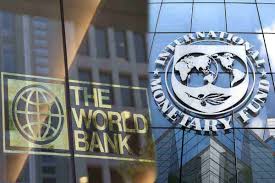
The global financial system is the backbone of international trade, investment, and economic stability. Two of the most influential institutions shaping this system are the International Monetary Fund (IMF) and the World Bank. Established in the aftermath of World War II, these organizations have played a central role in stabilizing currencies, financing development projects, and supporting nations in times of financial crisis. However, their roles have also been the subject of intense debate, ranging from praise for their stabilizing influence to criticism of their policies and governance structures.
This article explores the history, policies, criticisms, and future relevance of the IMF and World Bank, providing an evergreen resource for understanding their place in the modern world.
The Origins of the IMF and World Bank
The Bretton Woods Conference (1944)
The IMF and World Bank were both created at the Bretton Woods Conference in July 1944, held in New Hampshire, USA. Delegates from 44 countries gathered to design a new international economic order that would prevent the financial instability and protectionism that had contributed to the Great Depression and World War II.
- The IMF was established to promote global monetary cooperation, facilitate trade, stabilize exchange rates, and provide short-term financial assistance to member countries facing balance-of-payments problems.
- The World Bank (formally known as the International Bank for Reconstruction and Development, or IBRD) was tasked with financing post-war reconstruction and long-term development projects.
Post-War Reconstruction and Growth
Initially, the World Bank funded infrastructure projects such as roads, power plants, and schools, while the IMF oversaw exchange rate stability under the Bretton Woods fixed exchange rate system. Both institutions evolved significantly as the global economy shifted from post-war reconstruction to modern globalization.
The Role and Functions of the IMF
Ensuring Global Financial Stability
The IMF acts as a guardian of global financial stability. Its primary functions include:
- Surveillance – Monitoring global economic trends and offering policy advice.
- Financial Assistance – Lending to countries experiencing short-term balance-of-payments difficulties.
- Capacity Development – Providing technical assistance and training to improve economic governance.
Lending Mechanisms
The IMF lends to countries facing crises through arrangements such as:
- Stand-By Arrangements (SBA): Short-term support for balance-of-payments issues.
- Extended Fund Facility (EFF): Longer-term assistance for structural reforms.
- Emergency Financing: Aid during natural disasters, pandemics, or sudden capital outflows.
Policy Conditions
IMF loans often come with conditionality—requirements for recipient countries to implement economic reforms, such as reducing fiscal deficits, liberalizing markets, or restructuring public institutions.
The Role and Functions of the World Bank
Financing Development
Unlike the IMF, which focuses on financial stability, the World Bank’s mission centers on poverty reduction and sustainable development. It provides low-interest loans, grants, and technical assistance for projects that promote education, healthcare, infrastructure, and environmental sustainability.
Key Institutions of the World Bank Group
The World Bank is part of the larger World Bank Group, which includes:
- IBRD (International Bank for Reconstruction and Development): Provides loans to middle-income and creditworthy low-income countries.
- IDA (International Development Association): Offers grants and concessional loans to the world’s poorest countries.
- IFC (International Finance Corporation): Supports private sector investment in developing countries.
- MIGA (Multilateral Investment Guarantee Agency): Provides political risk insurance to encourage foreign investment.
- ICSID (International Centre for Settlement of Investment Disputes): Handles disputes between investors and states.
Policies and Programs
IMF Policies
The IMF typically focuses on macroeconomic stabilization, encouraging fiscal discipline, monetary stability, and trade liberalization. Its policies are designed to restore confidence in economies facing crisis.
World Bank Policies
The World Bank emphasizes long-term structural development, supporting projects in infrastructure, health, education, climate adaptation, and governance reform. It also promotes sustainable development goals (SDGs).
Criticisms of the IMF and World Bank
Despite their importance, both institutions face persistent criticisms.
Criticisms of the IMF
- Conditionality and Austerity: IMF loan conditions often require austerity measures—cutting government spending, raising taxes, or reducing subsidies—that critics argue worsen poverty and inequality.
- One-Size-Fits-All Approach: The IMF is accused of applying uniform economic models without adapting to local conditions.
- Dominance of Wealthy Nations: Voting power is based on financial contributions, giving the U.S. and European countries disproportionate influence.
Criticisms of the World Bank
- Social and Environmental Impacts: Large infrastructure projects have sometimes displaced communities or harmed ecosystems.
- Debt Burden: Loans to developing nations can increase debt, leaving countries struggling to repay.
- Western-Centric Development Models: Critics argue the World Bank promotes neoliberal policies that may not align with local traditions or priorities.
Shared Criticisms
Both institutions are often criticized for lacking transparency, accountability, and democratic representation of poorer nations.
Achievements and Contributions
Despite criticisms, the IMF and World Bank have made significant contributions:
- Helped stabilize economies during the Asian Financial Crisis (1997–1998) and the Global Financial Crisis (2008–2009).
- Supported global health initiatives, including funding during the COVID-19 pandemic.
- Advanced infrastructure and poverty-reduction programs in Africa, Asia, and Latin America.
- Played a role in setting global development agendas such as the Millennium Development Goals (MDGs) and Sustainable Development Goals (SDGs).
The Future Relevance of the IMF and World Bank
Adapting to a Changing World
The world economy is evolving, with new challenges such as:
- Climate Change: Financing adaptation and mitigation strategies.
- Digital Transformation: Supporting digital infrastructure and financial inclusion.
- Debt Sustainability: Helping countries manage rising debt burdens.
- Geopolitical Shifts: Addressing global power shifts and increasing influence of emerging economies like China and India.
Calls for Reform
For the IMF and World Bank to remain relevant, reforms are often suggested:
- Greater Representation: Increasing the voice of developing and emerging economies in decision-making.
- Flexible Policy Approaches: Tailoring advice to local conditions rather than applying rigid models.
- Transparency and Accountability: Strengthening governance and oversight.
- Sustainability Focus: Integrating climate resilience, green finance, and social inclusion into core strategies.
The Rise of Alternatives
New institutions such as the Asian Infrastructure Investment Bank (AIIB) and the BRICS New Development Bank (NDB) present alternatives to the IMF and World Bank. To remain central, these institutions must adapt to competition and modern demands.
Regional Alternatives and Emerging Institutions
Beyond the IMF and World Bank, new financial institutions have emerged, especially from the Global South, signaling a more multipolar financial order.
-
Asian Infrastructure Investment Bank (AIIB): Led by China, the AIIB funds infrastructure across Asia with faster approval processes and less conditionality compared to the World Bank.
-
New Development Ba Established by the BRICS nations (Brazil, Russia, India, China, South Africa), the NDB finances sustainable development and in
-
Regional Development Banks: Institutions like the Asian Development Bank (ADB), African Development Bank (AfDB), and Inter-American Development Bank (IDB) provide region-specific funding, sometimes complementing or competing with World Bank projects.
These alternatives challenge the dominance of IMF and World Bank lending, pressuring them to adapt by offering more flexible terms and aligning with the development priorities of borrower nations.
IMF, World Bank, and Global Inequality
One of the deepest critiques of both institutions is their impact on global inequality.
-
IMF and Austerity: IMF programs often require austerity measures that cut public spending on health, education, and social welfare, disproportionately hurting vulnerable populations. The Greek debt crisis (2010–2015) is a prime example, where austerity deepened unemployment and poverty.
-
World Bank Development Bias: Although the Bank finances poverty-reduction projects, many large-scale infrastructure initiatives—such as dams, highways, or industrial corridors—have disproportionately benefited foreign investors or local elites, while poor communities bear the costs of displacement or environmental damage.
-
The Dependency Debate: Critics argue that IMF and World Bank lending fosters dependency by locking countries into cycles of debt, limiting their sovereignty over economic policymaking. Supporters counter that these loans provide critical capital and expertise otherwise unavailable.
Governance and Power Dynamics
The governance structures of the IMF and World Bank reveal deep inequalities:
-
Voting Power: Both institutions allocate votes based on financial contributions. The U.S. holds veto power in the IMF due to its large quota share, while Europe traditionally dominates leadership positions.
-
Developing Countries’ Frustrations: Nations in Africa, Asia, and Latin America—often the main borrowers—have little influence over decision-making. This fuels perceptions that the IMF and World Bank act as tools of Western economic dominance.
-
Reform Proposals: Suggested reforms include redistributing voting power to better reflect the rise of emerging economies, diversifying leadership selection beyond the U.S. and Europe, and creating mechanisms for civil society participation.
Case Studies: Successes and Failures
Concrete examples illustrate both achievements and controversies.
-
Successes:
-
South Korea (1997–1998): IMF loans helped stabilize the Korean economy during the Asian Financial Crisis, though at the cost of significant restructuring.
-
Global Health Initiatives: The World Bank played a major role in financing campaigns against polio, malaria, and HIV/AIDS.
-
-
Failures:
-
Latin American Debt Crisis (1980s): IMF structural adjustment programs often worsened poverty by imposing strict austerity, reducing access to public services.
-
Narmada Dam Project (India): A World Bank-financed dam displaced tens of thousands of people and caused severe ecological disruption, sparking international protests.
-
These cases highlight the complex balance between stabilizing economies and protecting human rights and development priorities.
The Future: IMF, World Bank, and Global Challenges
The 21st century presents new challenges that require adaptation:
-
Climate Finance:
Both institutions now emphasize climate action. The World Bank funds renewable energy and climate resilience projects, while the IMF integrates climate risks into macroeconomic assessments. Yet critics argue that funding levels remain inadequate compared to the scale of the climate crisis. -
Digital Transformation:
Central Bank Digital Currencies (CBDCs) could reshape international monetary flows, potentially altering the IMF’s role in exchange-rate monitoring. Meanwhile, the World Bank promotes digital inclusion by funding mobile banking and fintech infrastructure in developing countries. -
Health Security:
COVID-19 underscored the global nature of health crises. The IMF provided emergency loans to more than 80 countries, while the World Bank mobilized billions for vaccine distribution and healthcare system strengthening. Future pandemics will likely expand their role in health financing.
Ongoing Reforms and Responses to Criticism
Both institutions have attempted to respond to decades of criticism:
-
IMF: Introduced more flexible lending instruments, streamlined conditionality, and incorporated social spending protections into some programs.
-
World Bank: Adopted new environmental and social safeguards to mitigate the harms of large-scale projects, and increased focus on gender equity and climate sustainability.
-
Limits of Reform: However, critics argue that these changes are incremental and fail to tackle structural imbalances in governance and power.
The IMF and World Bank remain indispensable pillars of the global financial order, but their legitimacy is increasingly questioned. To remain relevant, they must:
-
Empower developing countries with greater decision-making authority.
-
Adopt flexible, context-sensitive policies instead of one-size-fits-all approaches.
-
Embed sustainability and equity at the core of their missions.
In a world shaped by climate change, technological disruption, and geopolitical rivalry, the IMF and World Bank cannot simply preserve the post–World War II order. Their survival depends on their ability to adapt, democratize, and serve as truly global institutions. Otherwise, alternative lenders and regional development banks will increasingly fill the void.
Ultimately, the future of international cooperation—and the ability to manage crises that transcend borders—may hinge on whether these institutions embrace transformation or remain trapped in outdated structures.
Conclusion
The IMF and World Bank remain pillars of the global financial system, shaping how nations respond to crises, develop infrastructure, and manage economic growth. While their policies and practices have faced criticism, their influence is undeniable. Looking ahead, their future relevance will depend on how well they adapt to changing global realities—rising inequality, climate change, digital transformation, and shifts in geopolitical power.
Ultimately, the IMF and World Bank stand at a crossroads: they can either embrace reform and inclusivity, or risk losing ground to alternative institutions. Their enduring importance lies in their ability to foster international cooperation, promote stability, and support sustainable development in an interconnected world.
You might also like